
Effluent Treatment Plant Manufacturers in Delhi
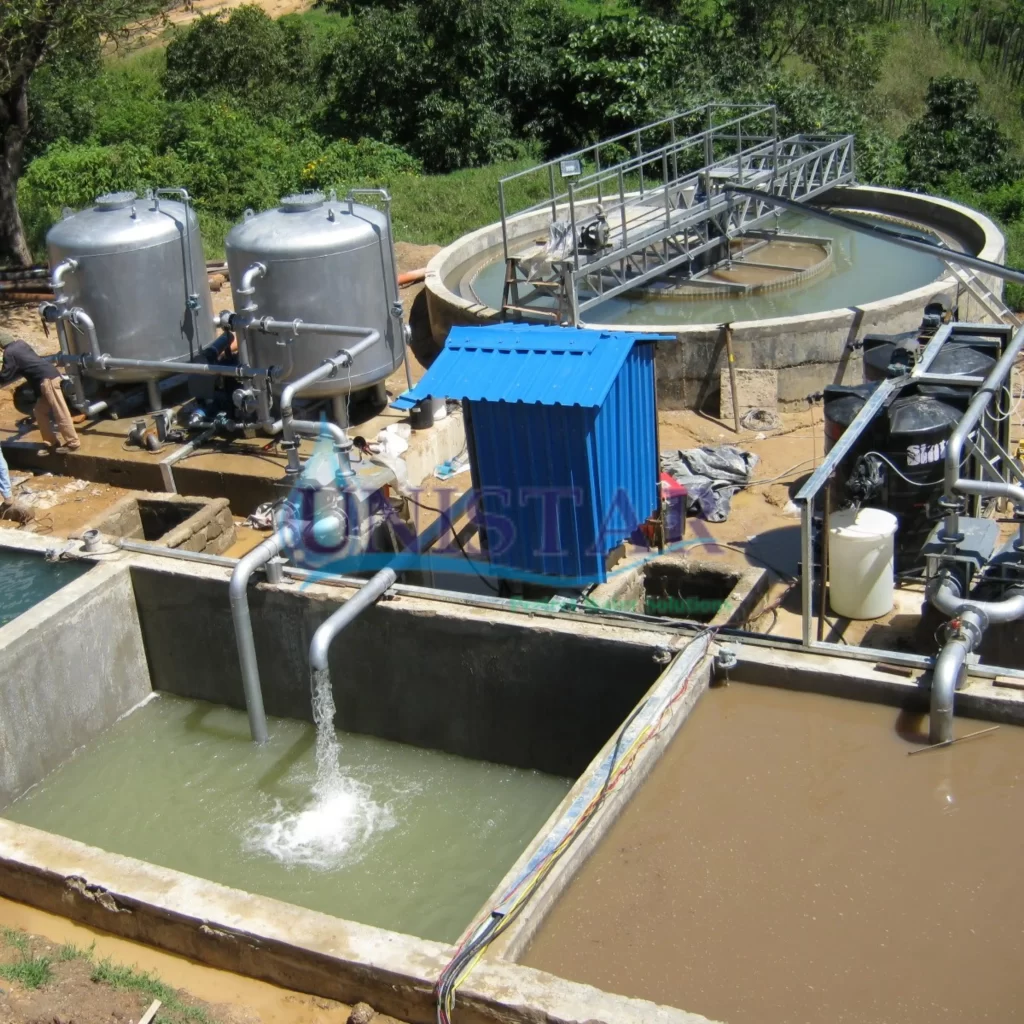
Unistar Aquatech Private Limited designs, manufactures and installs effluent treatment plants (ETPs) for industries in Delhi NCR. Our ETP plants treat industrial wastewater to meet [DPCC / CPCB / SPCB] discharge norms and can be paired with RO or ZLD systems for water reuse. Capacities range from 10 KLD to 1000 KLD, with custom designs available.
[Get a Free Quote] [Call: +91-9811701883]
Why Industries Choose Unistar Aquatech as Their ETP Plant Manufacturer
Every industry produces different wastewater, so one standard design rarely works. We start with your effluent characteristics (flow, COD, BOD, TSS, pH, oil and grease, heavy metals) and design the treatment train around them.
- Custom-designed plants: sized for your flow and treated to your discharge or reuse target
- Complete scope: design, manufacturing, installation, commissioning and after-sales support
- Automation options: manual, semi-automatic or PLC-based operation
- Reuse-ready: optional RO and ZLD integration to cut freshwater use
ETP Technologies We Offer
| Technology | Best For | What It Does |
|---|---|---|
| Physico-chemical treatment | Chemical, textile, electroplating, paint | Removes suspended solids, oil and grease, colour and heavy metals through coagulation, flocculation and clarification |
| Biological treatment | Food, dairy, distillery, beverage, pharma | Uses microorganisms to reduce BOD and COD in organic-rich wastewater |
| MBBR (Moving Bed Biofilm Reactor) | Sites with limited space | Compact biological treatment with stable performance and low sludge handling |
| SBR (Sequencing Batch Reactor) | Variable flow or batch processes | Automated fill, react, settle and decant cycles in a single tank |
| RO-based ETP | Water reuse projects | Adds membrane treatment after the ETP to recover water for process reuse |
| ZLD systems | Strict discharge restrictions | Recovers water and reduces liquid discharge through evaporation and related treatment stages in ETP plants. |
How an ETP Plant Works
A typical industrial ETP includes these stages. The exact train depends on your effluent.
- Screening: removes large solids and debris
- Equalization tank: balances flow and load so downstream units run steadily
- pH correction and chemical dosing: coagulant and flocculant addition
- Primary clarification: settles suspended solids and chemical sludge
- Biological treatment: aeration, MBBR or SBR to break down organic pollutants
- Secondary clarification and filtration: polishes the treated water
- Disinfection / tertiary treatment: as required for discharge or reuse
- Sludge handling: thickening and dewatering for disposal
Industries We Serve
We supply ETP plants for:
- Pharmaceutical: process and cleaning wastewater
- Chemical: effluent with variable pH and organic load
- Textile and dyeing: colour, COD and suspended solids
- Food processing, dairy and beverage: high BOD and COD, fats and oils
- Electroplating and metal processing: heavy metals and acidic or alkaline streams
- Paint and coatings: solvents, solids and colour
- Paper and pulp, distillery: high organic load
- Automobile and general manufacturing: oily and washing wastewater
What Affects the Cost of an ETP Plant?
There is no single price, because the cost depends on:
- Daily flow (KLD) and peak flow
- Type and strength of effluent (COD, BOD, oil, metals, colour)
- Required output quality (discharge norms or reuse)
- Treatment technology (physico-chemical, MBBR, SBR, RO, ZLD)
- Level of automation and instrumentation
- Civil work: tanks, foundation and site conditions
- Material of construction (MS, FRP, RCC, SS)
- Installation, commissioning and O&M scope
Frequently Asked Questions
An ETP treats industrial wastewater to remove pollutants before it is discharged or reused. It helps industries meet pollution control norms and avoid penalties.
Chemical and electroplating units often need physico-chemical treatment. Food, dairy and distillery wastewater usually needs biological treatment such as MBBR or SBR. Our engineers recommend a train after reviewing your effluent analysis.
From 10 KLD to 1000 KLD, plus custom capacities.
Yes. With RO or ZLD stages, treated water can be recovered for process, cooling or utility use, depending on quality requirements.
Cost depends on flow, effluent quality, technology, automation and civil requirements. Share your details for a tailored quotation.