
Effluent Treatment Plant For Food Industry
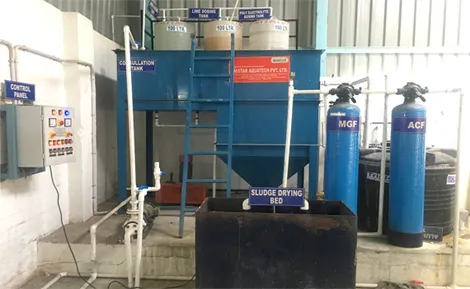
Unistar Aquatech Private Limited designs and manufactures effluent treatment plants for food processing units. Our plants are built at our Mohan Nagar, Ghaziabad facility in capacities from 10 KLD to 1,000 KLD, and each one is sized around your own wastewater: its flow, organic load, oil and grease, and your discharge or reuse target. We supply treatment for dairy, beverage, bakery, edible oil, rice mill, sugar and other food units, with optional RO for water reuse.
How is Effluent Generated in the Food Industry, and What Does It Contain?
Food processing operations require large volumes of water at nearly every stage — washing raw material, cooking, cleaning equipment, and sanitizing facilities — and all of this generates a corresponding volume of wastewater as a by-product. Because food processing methods vary widely (dairy, beverage, meat, bakery, oil processing, etc.), the strength and composition of the effluent varies from one facility to another.
Typically, food industry wastewater contains:
- High concentrations of suspended solids and total solids
- Elevated BOD (Biological Oxygen Demand) and COD (Chemical Oxygen Demand)
- Oil, grease, and fats
- Starch, proteins, and sugars
- Colour and preservatives
- Nutrients such as nitrogen, ammonia, and phosphate
If discharged untreated, this effluent can cause serious pollution in receiving water bodies and is why treatment plants must be designed according to each facility’s specific wastewater characteristics rather than a one-size-fits-all approach.
Benefits of Our Treatment Systems
Our treatment systems help industries:
- Remove harmful pollutants from wastewater
- Improve water quality
- Support water recycling processes
- Reduce operational costs
- Maintain environmental compliance
- Increase overall treatment efficiency
Additional benefits include:
- Reduced environmental impact
- Better wastewater management
- Improved operational performance
- Low maintenance requirements
- Energy-efficient operation
- Long-lasting performance
Why is an ETP Essential for Food Industries?
Effluent Treatment Plants have proven to be the most effective solution for treating food industry wastewater, without which water-borne pathogens can spread and degrade receiving water bodies. An ETP for the food industry helps facilities:
- Discharge wastewater safely while staying compliant with environmental regulations
- Reduce pollution levels and improve overall water quality
- Support water recycling and reuse within the facility
- Lower operational costs over time through efficient treatment
- Maintain a strong environmental and industry reputation
- Operate as a largely self-sustaining system with minimal manual intervention
Treatment Process — How Our ETP for Food Industry Works
Our ETP systems combine physical, chemical, and biological treatment methods across four treatment levels to bring food industry effluent down to safe, dischargeable, or reusable parameters.
1. Preliminary Treatment
The first stage removes coarse solids and large materials from the effluent to prevent damage to downstream equipment. This typically involves coarse screening, grit removal, and — where needed — breaking down larger objects into smaller ones before the wastewater moves to primary treatment.
2. Primary Treatment
This stage removes large solids through physical settling and filtration, separating floating material and heavy solids from the liquid waste. Primary clarifiers can effectively remove 50–60% of suspended solids, along with a significant portion of oil and grease, organic nitrogen, organic phosphorus, and heavy metals associated with those solids.
3. Secondary Treatment
This stage targets suspended solids and residual organic matter using aerobic or anaerobic biological processes — most commonly the activated sludge process. Wastewater enters an aeration tank where oxygen is supplied to microorganisms that break down biodegradable dissolved and colloidal organic matter.
4. Tertiary Treatment
The final stage further improves effluent quality by removing any contaminants not addressed in earlier stages. This involves a disinfection process (using chlorine, UV light, or ozone) that leaves no harmful residues, making the treated water safe to discharge or recycle for reuse within the facility.
Our ETP Solutions and Technology
ETP Plant for Food Industry is an effective plant that treats wastewater and removes impurities — including organic matter, oils, starch, proteins, and other suspended solids generated in large volumes through food manufacturing processes. Because food industry wastewater varies based on the specific manufacturing process, we design each treatment plant around the particular needs of that operation rather than offering a generic system.
The plants we build use up-to-date technology and components to help industries lower pollution levels, improve water quality, and maximize process efficiency. As environmental awareness and wastewater management regulations continue to grow, having a treatment system that can handle large volumes of water efficiently has become essential for food processing facilities looking to operate sustainably and remain compliant long-term.
Wastewater from Restaurants and Commercial Kitchens
Wastewater from restaurants and commercial kitchens consists of fats, oils, food particles, detergents, and organic solids — a somewhat different profile from large-scale food processing effluent, often with higher concentrations of FOG (fats, oils, and grease) from cooking operations. A properly engineered ETP installation for restaurants and commercial kitchens ensures effective wastewater management, prevents drain and grease-trap issues, and helps maintain hygiene and cleanliness standards across the facility.
Effluent Treatment Plant for Food Industry in India — Why Choose Unistar Aquatech
The need for effluent treatment plants in India’s food industry continues to grow as companies become more focused on managing their wastewater responsibly and adopting environmentally friendly production practices. Food industries need an effective system that handles their wastewater while maintaining strong performance efficiency.
We offer a range of innovative wastewater treatment equipment built specifically for the food processing industry. As an experienced manufacturer, we design each system to meet your facility’s exact requirements and back it with dedicated support to ensure consistent, long-term performance.
Get in touch:
- Call: +91-9811701883
All Services
Download PDF
Frequently Asked Questions
Most food processing units generate effluent that must be treated to the pollution board’s limits before discharge. The requirement depends on your size, effluent volume and consent conditions, so check with your state pollution control board.
When the effluent carries a lot of oil, grease or fats, as in dairy, edible oil, bakery and meat processing. Removing FOG first protects the biological stage.
MBBR suits sites with limited space and fairly steady flow. SBR suits batch production and variable flow. We recommend one after reviewing your flow pattern and effluent data.
For very high-strength effluent such as sugar or similar high-COD streams, where an anaerobic stage cuts the load first and can recover biogas.
Yes, for non-process uses such as cleaning of floors and yards, gardening and cooling, depending on the quality achieved. Adding RO can make it suitable for more uses. Reuse in product contact needs your own quality approval.
It depends on flow and technology. MBBR and SBR designs are compact compared with conventional systems.
Daily and peak flow, an effluent analysis (COD, BOD, TSS, oil and grease, pH), your production pattern, discharge or reuse target, and available area.
It depends on flow, effluent strength, technology, automation and civil work. Share your details for a quotation.