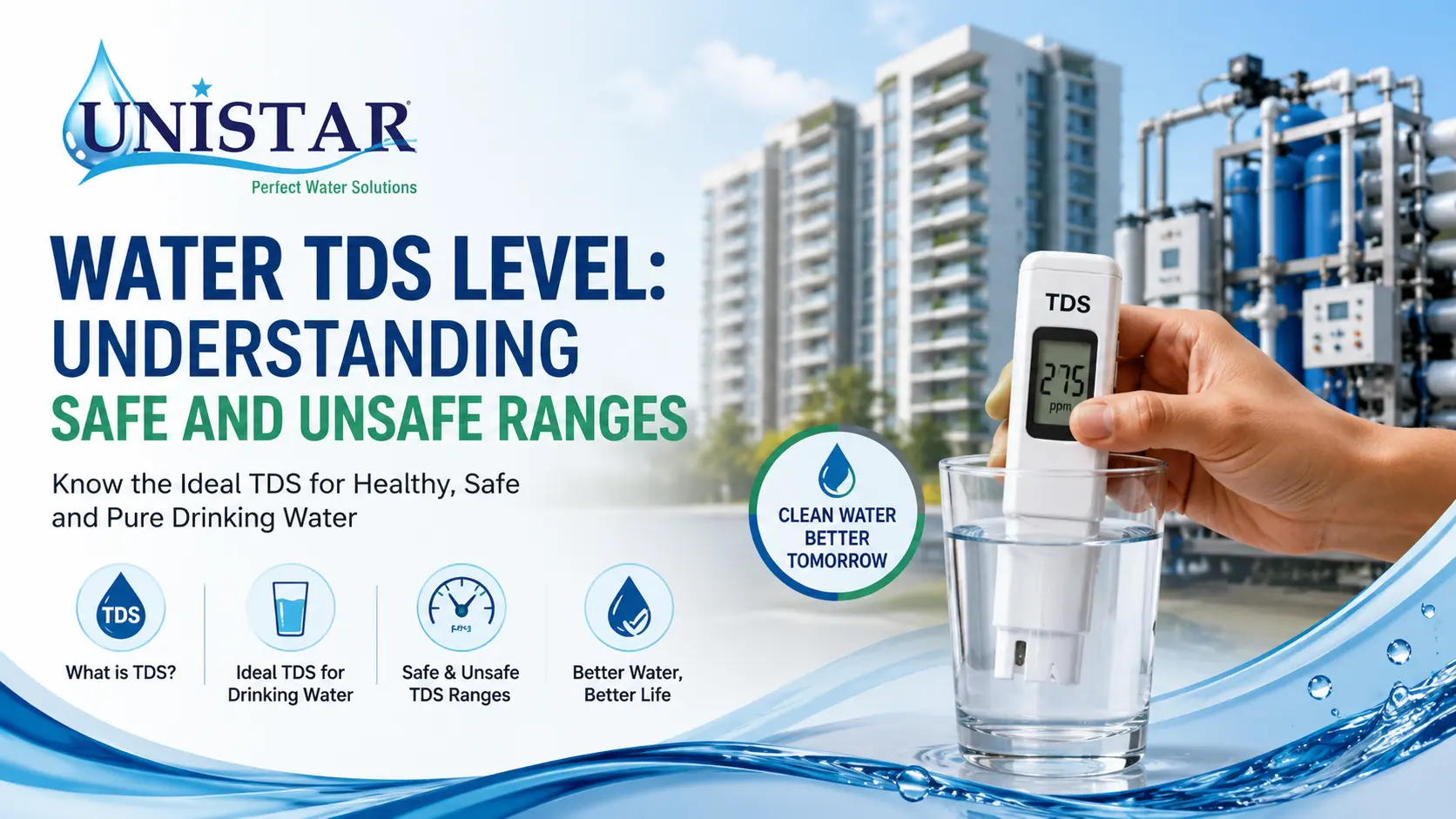
Water quality is one of the most important factors that directly affects health and daily life. While people usually judge water quality by its appearance, clean-looking water may still contain dissolved particles and impurities that are not visible to the naked eye. This is where the water TDS level becomes important. TDS is one of the key measurements used to determine water quality and identify whether water is suitable for drinking and other applications.
At Unistar Aquatech Private Limited, we understand the importance of providing clean and safe water solutions. Water treatment systems are designed not only to remove impurities but also to maintain a balanced mineral composition for better quality and usability. Understanding TDS levels helps individuals, industries, and residential users make informed decisions about water purification systems.
What is TDS in Water?
TDS stands for Total Dissolved Solids, which represents the total concentration of dissolved substances present in water. These substances can include minerals, salts, organic matter, and trace elements that enter water naturally or through external environmental factors.
When rainwater moves through soil, rocks, and underground layers, it dissolves minerals and compounds that become part of the water supply. Water may also collect dissolved substances from industrial activities, pipelines, agricultural runoff, and treatment processes.
Although certain minerals are beneficial, an imbalance in dissolved solids can affect water quality. Too many dissolved particles can change taste, increase hardness, and reduce the efficiency of appliances and industrial equipment.
Also Read: Normal TDS Level in Drinking Water
Why Water TDS Level Matters
The water TDS level acts as an important indicator of water quality. It helps determine whether water contains excessive dissolved substances or whether it has a healthy balance of minerals. Water with extremely high dissolved solids may taste unpleasant and create scaling issues. On the other hand, extremely low TDS levels can remove essential minerals that naturally improve water quality and taste.
Monitoring water TDS levels helps maintain:
- Better water quality
- Improved drinking water standards
- Reduced pipe scaling
- Increased appliance life
- Better industrial performance
- Efficient water treatment processes
Regular monitoring ensures that water remains suitable for both domestic and commercial use.
Understanding Water TDS Range
Different water sources naturally contain different amounts of dissolved solids. Therefore, the water TDS range may vary depending on the source and treatment process.
Generally, TDS values can be categorized into several levels:
- Below 50 ppm: Water contains very low mineral content and may taste flat.
- 50–150 ppm: Water has a relatively low concentration of dissolved solids.
- 150–300 ppm: Considered a good and balanced range for water quality.
- 300–500 ppm: Acceptable for drinking in many situations.
- 500–900 ppm: Moderate water TDS level where taste may start changing.
- 900–1200 ppm: Water quality may begin to deteriorate.
- Above 1200 ppm: Usually considered unsuitable for regular drinking purposes.
Understanding the water TDS range helps people identify whether treatment or filtration systems are required.
Best TDS Level for Drinking Water
People often search for the best water TDS level for drinking water because there is a common misconception that lower TDS always means healthier water. However, water quality is not simply about reducing water TDS as much as possible. Water naturally contains essential minerals such as calcium and magnesium that contribute to taste and support overall quality. If all dissolved solids are removed completely, the water may lose its natural characteristics. The best water TDS level for drinking water generally maintains a balance between purity and mineral content. Water with balanced dissolved minerals usually tastes better and offers a more pleasant drinking experience. Instead of focusing only on lower values, people should consider the overall composition and source of the water.
Ideal TDS for Drinking Water
The ideal TDS for drinking water is generally considered a range where water contains beneficial minerals without excessive dissolved impurities.
Water with balanced mineral levels can provide:
- Better taste
- Improved water quality
- Reduced scaling issues
- Healthier mineral content
- Enhanced usability
However, the ideal range may vary depending on geographical location, water source, and treatment methods. Modern water purification systems are often designed to maintain essential minerals while reducing unwanted dissolved substances.
How High TDS Levels Affect Water
Higher dissolved solid concentrations may not always indicate unsafe water, but they can create several problems over time. One common issue is taste. Water with excessive dissolved minerals often develops a salty, bitter, or metallic flavor that many people find unpleasant.
Another major concern is scale formation. Minerals such as calcium and magnesium can accumulate inside pipes, boilers, water heaters, and household appliances. Over time, this buildup reduces efficiency and increases maintenance costs. In industrial applications, high dissolved solids may interfere with production processes and reduce equipment performance. Very high TDS levels may also indicate the presence of contaminants that require further testing and treatment.
What Happens When TDS Levels Are Too Low?
Many people believe extremely low TDS water is always better because it appears highly purified. However, very low water TDS levels can also create certain concerns. Water with extremely low dissolved solids often lacks natural minerals that improve taste and quality. Such water may taste bland or flat compared to balanced mineral water. Very low water TDS level can also become more aggressive toward plumbing systems and may slowly affect pipelines and storage systems over long periods. Maintaining proper mineral balance remains important for overall water quality.
TDS Level for Drinking Water in Daily Life
The required tds level for drinking water can vary depending on where the water is being used. Drinking water, industrial water, and commercial water applications often require different treatment standards. For example, residential drinking water focuses on maintaining taste and safety, while industrial applications may require very specific dissolved solid levels for machinery and processing operations. Understanding water usage requirements helps determine whether advanced treatment systems such as reverse osmosis, softening, or filtration are necessary.
Role of Water Treatment Systems in Managing TDS
Modern water treatment systems play a major role in maintaining proper dissolved solid levels. These systems help improve water quality while preserving necessary minerals. Reverse osmosis systems are commonly used to reduce dissolved solids and remove unwanted contaminants from water. Water softening systems help reduce hardness-causing minerals, while multi-stage filtration systems improve overall water quality.
At Unistar Aquatech Private Limited, we provide advanced water treatment solutions designed for residential, commercial, and industrial applications. Our systems focus on delivering high-quality water while maintaining performance, efficiency, and reliability.
Conclusion
Understanding the water TDS level is essential for ensuring safe and good-quality water. Knowledge about the water TDS range, identifying the best water TDS level for drinking water, and understanding the ideal TDS for drinking water can help individuals make better decisions regarding water treatment and consumption.
Maintaining the right water tds level for drinking water is not only important for health but also for improving taste, protecting appliances, and ensuring long-term water quality. With proper water treatment solutions and regular monitoring, users can enjoy cleaner, safer, and more balanced water for everyday use.