Water is one of the most valuable natural resources on Earth, yet many regions face water shortages due to increasing population, urbanization, and climate change. One of the most effective ways to conserve water and reduce dependence on groundwater is through a rainwater harvesting system. By collecting and storing rainwater, households, commercial buildings, industries, and institutions can make better use of natural rainfall while contributing to environmental sustainability.
In this guide, we will explore what a rainwater harvesting system is, the different types of rainwater harvesting, popular rain water harvesting methods, and the many benefits of adopting this eco-friendly solution.
Also Read: Solid Waste Management: Methods, Benefits and Industrial Applications
What is a Rainwater Harvesting System?
A rainwater harvesting system is a method of collecting, storing, filtering, and utilizing rainwater for various purposes. Instead of allowing rainwater to flow away as runoff, it is captured and stored for future use or directed into the ground to recharge groundwater levels.
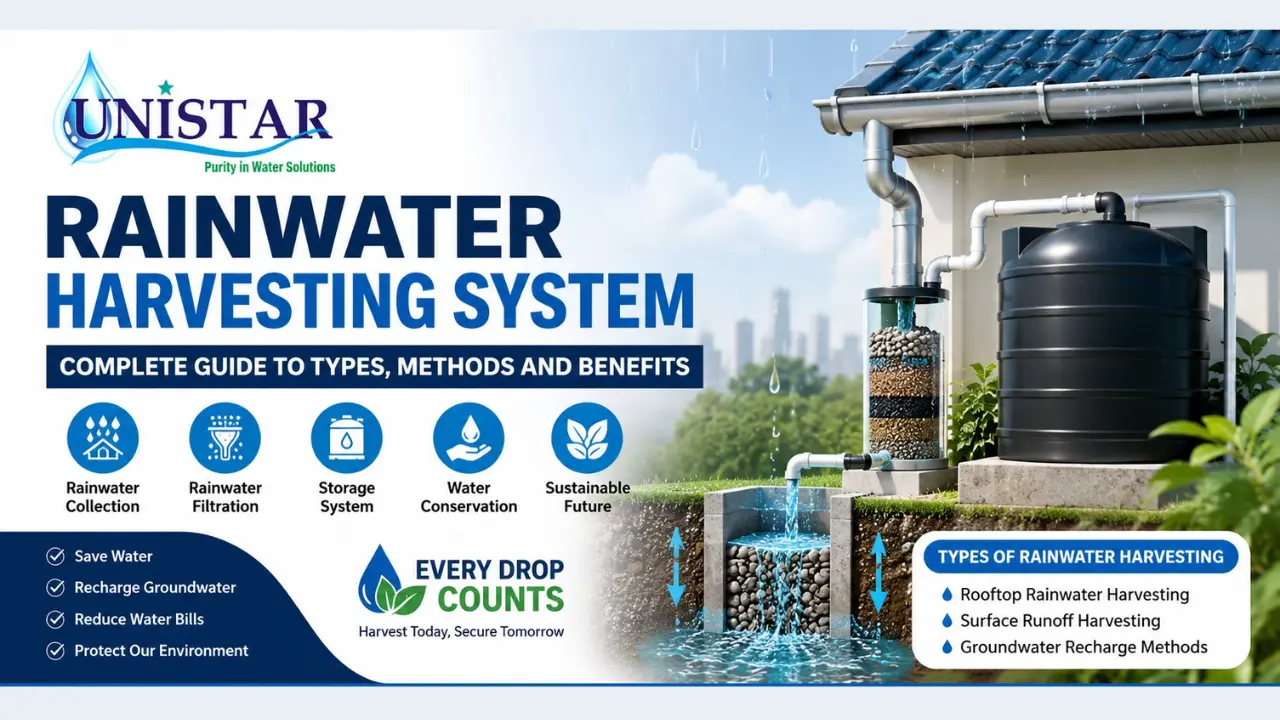
A well-designed water harvesting system typically includes catchment areas, gutters, downpipes, filters, storage tanks, and a rainwater filtration system. Depending on the requirement, the collected water can be used for irrigation, cleaning, flushing, industrial processes, and even drinking after proper treatment.
Why is Rain Water Harvesting Important?
With increasing pressure on freshwater resources, rain water harvesting has become an essential water conservation practice. It helps reduce water scarcity, lowers water bills, minimizes urban flooding, and improves groundwater recharge.
Some key reasons why rain harvesting is important include:
- Conserves freshwater resources
- Reduces dependency on municipal water supply
- Helps recharge groundwater levels
- Decreases water runoff and soil erosion
- Supports sustainable water management
- Provides an alternative water source during shortages
Types of Rainwater Harvesting
Understanding the different types of rainwater harvesting can help property owners choose the most suitable system for their needs.
1. Rooftop Rainwater Harvesting
Rooftop rainwater harvesting is the most common and widely used method. Rainwater falling on rooftops is collected through gutters and pipes and then directed to storage tanks or groundwater recharge structures.
This method is suitable for:
- Residential buildings
- Schools and colleges
- Commercial complexes
- Hospitals
- Industrial facilities
2. Surface Runoff Harvesting
In this method, rainwater flowing over roads, open grounds, and other surfaces is collected and stored. Surface runoff harvesting is often used in rural areas, agricultural lands, and large industrial premises.
3. Groundwater Recharge Systems
Instead of storing rainwater directly, these systems allow water to percolate into the soil through recharge pits, trenches, wells, or borewells. This helps restore depleted groundwater reserves and improves water availability in the long term.
Rain Water Harvesting Methods
There are several effective rain water harvesting methods used across residential, commercial, and industrial sectors. The choice depends on available space, rainfall patterns, and water requirements.
- Recharge Pits- Recharge pits are shallow excavated pits filled with gravel, sand, and pebbles. Rainwater collected from rooftops is directed into these pits, allowing it to seep into the ground.
- Recharge Trenches- Recharge trenches are long and narrow excavations designed to increase groundwater recharge. They are commonly installed in areas with limited space.
- Recharge Wells- Recharge wells are deeper structures that allow harvested rainwater to enter underground aquifers directly. These are highly effective in urban areas facing groundwater depletion.
- Percolation Tanks- Percolation tanks are large reservoirs designed to store rainwater temporarily and facilitate gradual groundwater recharge.
- Check Dams- Check dams are small barriers built across streams or water channels. They slow down water flow and increase groundwater recharge.
These are some of the most commonly used methods of rainwater harvesting and methods of rain water harvesting implemented across India for water conservation and groundwater replenishment.
Components of a Rainwater Collection System
An efficient rainwater collection system consists of several important components that work together to collect and store water.
- Catchment Area- The catchment area is the surface that receives rainfall, usually a rooftop.
- Gutters and Downpipes- These channels collect rainwater and direct it toward storage or filtration units.
- Rainwater Filtration System- A rainwater filtration system removes leaves, dust, dirt, and other contaminants before water enters the storage tank.
- Storage Tank- The storage tank is used for collecting and preserving harvested rainwater for future use.
- Distribution System- Pumps and pipelines help distribute stored water wherever required.
Importance of Rainwater Filtration
A good rainwater filtration setup is essential for maintaining water quality. Rainwater can collect dust, leaves, bird droppings, and other impurities from rooftops and collection surfaces.
A properly designed rainwater filtration system helps:
- Improve water quality
- Prevent contamination
- Protect storage tanks
- Reduce maintenance costs
- Make water suitable for various applications
For drinking purposes, additional purification and treatment processes may be required.
Benefits of Harvesting Rain Water
The practice of harvesting rain water offers numerous environmental, economic, and social benefits.
- Water Conservation- Rainwater harvesting reduces the demand for freshwater sources and promotes responsible water use.
- Reduced Water Bills- Stored rainwater can be used for gardening, cleaning, flushing, and industrial purposes, resulting in lower water expenses.
- Groundwater Recharge- One of the biggest advantages of a water harvesting system is its ability to replenish underground water reserves.
- Flood Control- Capturing rainwater helps reduce stormwater runoff and minimizes urban flooding during heavy rainfall.
- Environmental Sustainability- Rainwater harvesting supports eco-friendly development and reduces stress on natural water bodies.
- Emergency Water Supply- Stored rainwater provides a valuable backup source during water shortages and drought conditions.
Applications of Rainwater Harvesting
Today, rain water collection systems are being adopted across various sectors.
- Residential Buildings- Homeowners use harvested rainwater for gardening, washing vehicles, cleaning floors, and flushing toilets.
- Commercial Buildings- Offices, malls, and hotels install rainwater harvesting systems to reduce water consumption and operational costs.
- Industries- Industrial facilities use harvested rainwater in cooling systems, washing processes, and utility applications.
- Educational Institutions- Schools and colleges use rainwater harvesting to promote sustainability and reduce water expenses.
- Agriculture- Farmers use stored rainwater for irrigation, improving water availability during dry periods.
What is a Water Harvester?
A water harvester refers to a system or structure designed to collect and store rainwater efficiently. It can range from simple rooftop collection setups to advanced industrial rainwater harvesting plants with filtration and storage facilities. As water scarcity becomes a growing concern, investing in a reliable water harvester is becoming increasingly important for both urban and rural communities.
Conclusion
A Rainwater Harvesting System is one of the most practical and sustainable solutions for water conservation. Whether through rooftop rainwater harvesting, recharge pits, recharge wells, or other rainwater harvesting methods, these systems help reduce water wastage and improve groundwater levels.
By implementing effective rainwater collection systems and proper rainwater filtration, individuals, businesses, and industries can contribute to a more sustainable future while ensuring a reliable water supply. As the demand for water continues to rise, adopting rain water harvesting practices is no longer just an option—it is a necessity for responsible water management and environmental protection.