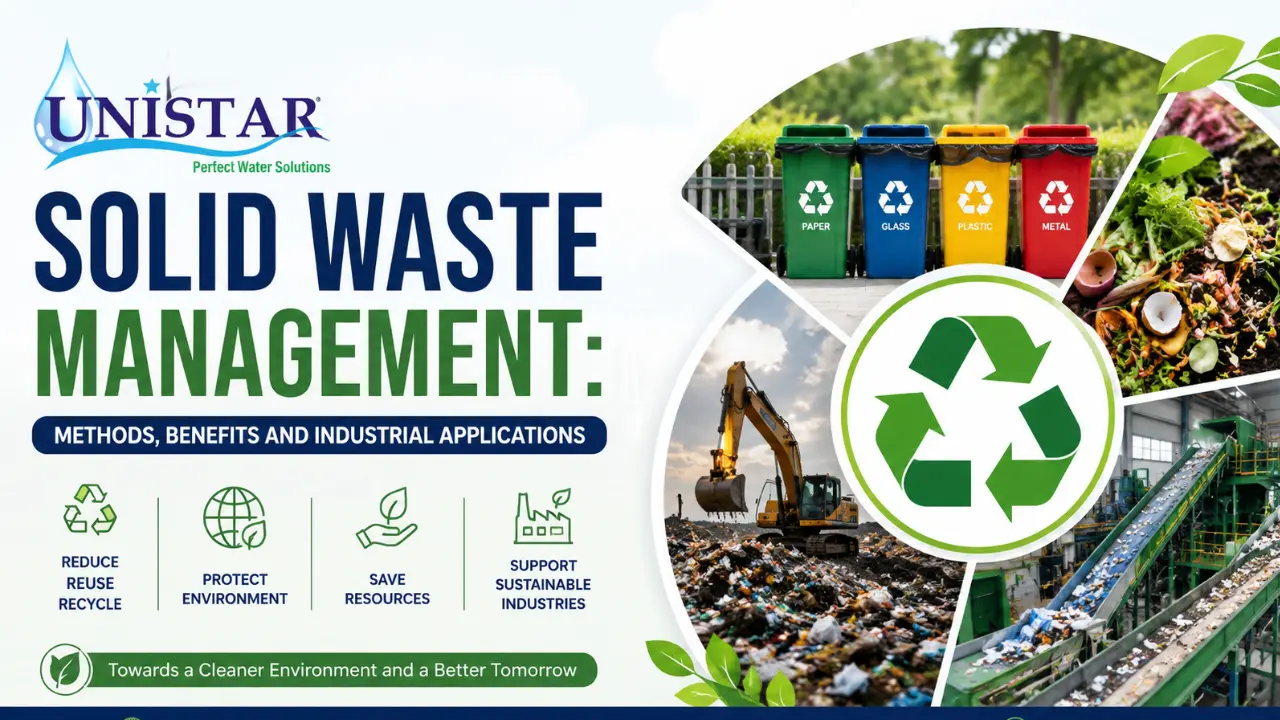
Waste generation is increasing every day due to rapid industrial growth, urban development, and changing lifestyles. Whether it comes from homes, industries, hospitals, offices, or commercial spaces, waste needs to be managed properly to protect the environment and human health. Improper handling of waste can lead to pollution, health risks, and damage to natural resources.
This is where Solid Waste Management: Methods, Benefits and Industrial Applications becomes important. Proper waste management helps reduce environmental impact, improve cleanliness, and support sustainable development. At Unistar Aquatech Private Limited, we understand the importance of efficient environmental solutions and sustainable waste handling practices.
In this blog, we will understand what is solid waste management, different methods used for waste handling, its benefits, and industrial applications in simple language.
What is Solid Waste Management?
Solid waste management is the process of collecting, transporting, treating, recycling, and properly disposing of waste materials generated from residential, commercial, and industrial activities. The main objective is to reduce the harmful effects of waste on the environment and public health.
Solid waste includes: Household waste, Industrial waste, Food waste, Plastic waste, Paper and packaging materials, Construction waste, Metal and glass waste, Agricultural waste. Proper management ensures that waste is handled safely and useful materials are recovered whenever possible.
Also Read: Water TDS Level: Understanding Safe and Unsafe Ranges
Why is Solid Waste Management Important?
Without proper waste handling systems, waste can accumulate and create serious environmental and health problems. Open dumping and improper waste disposal can contaminate water, soil, and air.
Effective solid waste management helps:
- Reduce environmental pollution
- Improve public hygiene
- Conserve natural resources
- Reduce greenhouse gas emissions
- Promote recycling and reuse
- Support sustainable development
Proper waste handling also improves the overall quality of life and creates cleaner surroundings.
Methods of Solid Waste Management
There are several methods of solid waste management used depending on the type and quantity of waste generated. Each method serves a specific purpose and helps reduce environmental impact.
- Recycling- Recycling is one of the most common and effective methods used for managing waste. Materials such as paper, plastic, glass, and metal can be collected and processed to create new products.
Recycling helps reduce waste accumulation and conserves natural resources. - Composting- Composting is mainly used for organic waste materials such as food waste, garden waste, and agricultural waste. In this process, organic materials decompose naturally and convert into nutrient-rich compost.
This method is commonly used in agriculture and gardening applications. - Landfilling- Landfilling is one of the traditional methods used for waste disposal. In this process, waste is collected and placed in specially designed landfill sites. Modern landfills include protective systems that reduce environmental contamination.
- Incineration- Incineration involves burning waste materials at high temperatures. This process reduces waste volume and can also generate energy. Industries often use this method for handling specific types of waste materials.
- Waste-to-Energy Technology- Waste-to-energy systems convert waste into useful energy through different treatment technologies. This approach helps reduce landfill waste and supports energy production.
Methods of Waste Management Used in Industries
Industries generate different types of waste including solid waste, chemical waste, packaging materials, sludge, and manufacturing waste. Therefore, industries use specialized methods of waste management according to operational requirements.
Industrial waste management may include:
- Segregation of waste materials
- Recycling of reusable materials
- Treatment of hazardous waste
- Controlled waste disposal systems
- Waste minimization practices
- Recovery and reuse techniques
These methods help industries improve sustainability and reduce environmental impact.
Disposal of Solid Waste
Proper disposal of solid waste is extremely important for maintaining environmental balance and public safety. Waste disposal should always be carried out using approved methods and technologies to minimize harmful effects.
- Some commonly used disposal methods include: Sanitary landfills, Controlled incineration, Composting facilities, Recycling centers, Waste treatment plants
- Improper waste disposal can lead to: Water pollution, Air pollution, Soil contamination, Health hazards, Spread of diseases.
This is why organizations and industries are increasingly adopting modern waste management systems.
Benefits of Solid Waste Management
Implementing an efficient waste management system offers several advantages for individuals, businesses, and industries.
- Environmental Benefits- Proper waste handling reduces pollution and protects natural ecosystems. Recycling and reuse also help conserve valuable resources.
- Economic Benefits- Efficient waste management reduces operational costs and creates opportunities for material recovery and energy generation.
- Health Benefits- Proper waste disposal minimizes the spread of harmful bacteria and diseases, creating healthier living and working environments.
- Resource Conservation- Recycling and waste recovery reduce the need for raw materials and support sustainable production practices.
- Improved Sustainability- Effective waste management supports long-term environmental sustainability and responsible resource utilization.
Industrial Applications of Solid Waste Management
Solid waste management plays an important role in various industries because every manufacturing process generates waste in some form. Industries where waste management systems are widely used include:
- Food processing industries
- Pharmaceutical industries
- Chemical manufacturing units
- Textile industries
- Metal processing industries
- Construction industries
- Power plants
- Packaging industries
These industries use waste management systems to reduce environmental impact and improve operational efficiency.
Role of Unistar Aquatech Private Limited
At Unistar Aquatech Private Limited, we focus on providing sustainable environmental solutions that help industries manage wastewater and support responsible resource utilization. Modern industries require effective treatment and waste handling systems to maintain environmental standards and improve operational efficiency. We continuously work toward delivering innovative solutions that help businesses adopt cleaner and more sustainable practices.
Conclusion
Understanding Solid Waste Management: Methods, Benefits and Industrial Applications is essential in today’s world where waste generation is continuously increasing. Proper waste handling not only protects the environment but also improves resource management and public health.
Different methods of solid waste management and proper disposal of solid waste help industries and communities reduce pollution and create cleaner surroundings. As industries move toward sustainable development, efficient waste management practices will continue to play an important role in building a healthier future. By adopting responsible waste handling practices today, businesses and communities can create a cleaner and more sustainable tomorrow.