Wastewater treatment generates sludge containing water, suspended solids, organic matter, microorganisms, and other impurities removed during the treatment process. Managing this sludge properly is essential for maintaining plant efficiency, controlling waste-handling costs, and supporting environmental protection. One of the most effective ways to simplify sludge management is through dewatering.
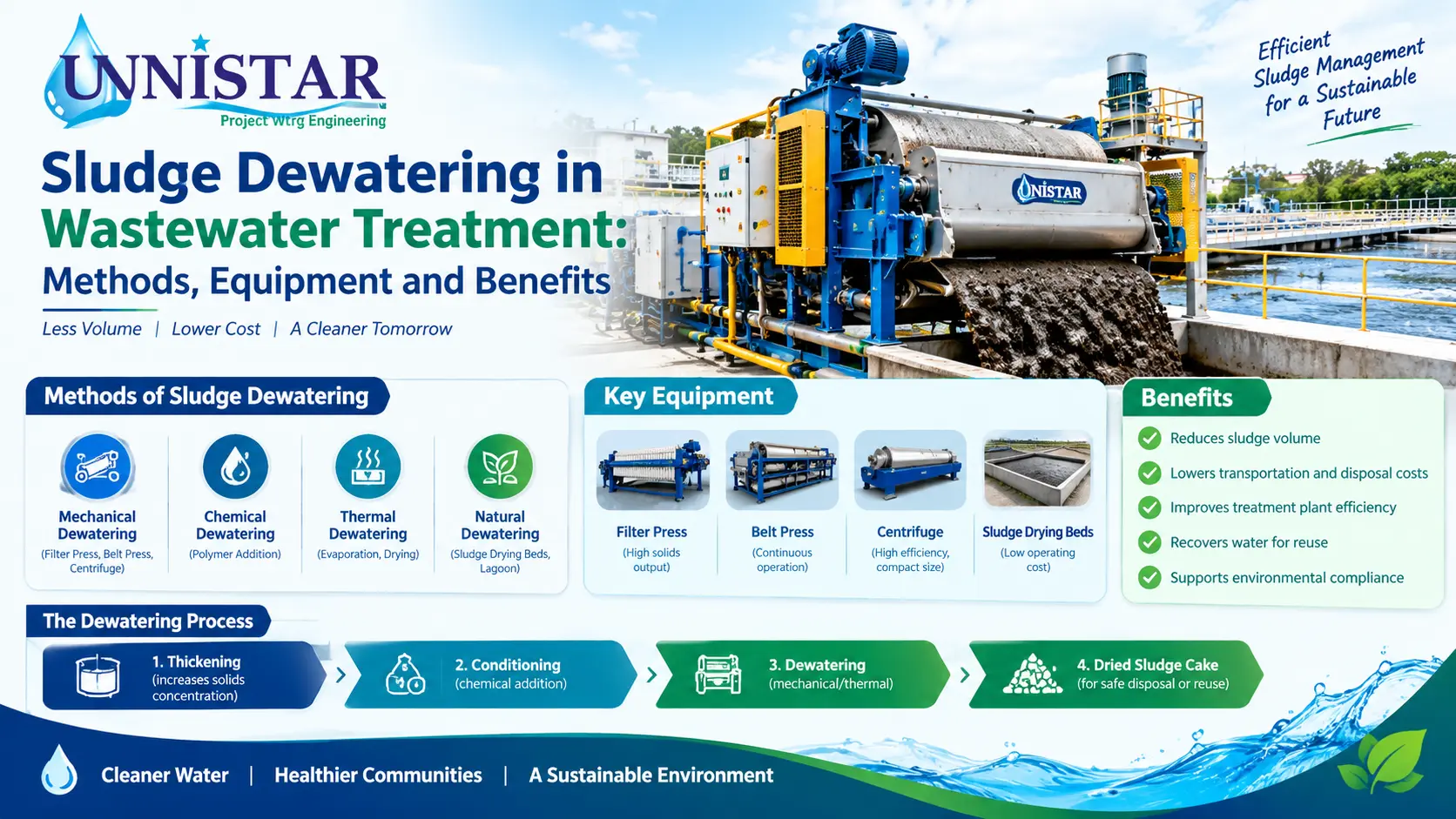
Sludge dewatering is the process of removing excess water from sludge to reduce its volume and make it easier to handle, transport, and dispose of. Industries, sewage treatment plants, and effluent treatment facilities use different dewatering methods depending on sludge characteristics, treatment capacity, available space, and operating requirements.
At Unistar Aquatech Private Limited, water and wastewater treatment solutions help industries and other facilities manage wastewater through suitable treatment systems, including sewage treatment plants (STPs), effluent treatment plants (ETPs), industrial RO plants, and related services. Understanding sludge dewatering is an important part of planning an efficient wastewater treatment system.
What Is Sludge Dewatering in Wastewater Treatment?
Sludge dewatering is a solid-liquid separation process that removes a portion of the water contained in sludge. The sludge produced during wastewater treatment can be difficult to manage because it often contains a high percentage of moisture.
Dewatering reduces the volume of this material and produces a more concentrated solid, commonly called a sludge cake when mechanical equipment is used.
For example, sludge collected from a clarifier may contain substantial amounts of water. After suitable conditioning and dewatering, the resulting material becomes easier to collect and transport.
The separated liquid, known as filtrate or centrate depending on the equipment, may be returned to an appropriate stage of the treatment plant after assessing its quality and the plant’s capacity.
It is important to understand that dewatering does not automatically make sludge safe for disposal or reuse. Its final handling depends on its chemical composition, contaminant levels, and applicable environmental requirements.
Also Read: Types of Sewage Treatment Plants: Working, Applications
Why Is a Sludge Dewatering System Important?
A properly selected sludge dewatering system helps wastewater treatment facilities manage the solid waste generated during daily operations.
1. Reduces Sludge Volume
Sludge contains a significant quantity of water, which increases the volume of material requiring handling. Removing some of this water reduces the amount of sludge that must be stored, transported, and processed further.
2. Helps Control Operating Costs
Lower sludge volumes can reduce transportation frequency, storage requirements, and certain downstream handling expenses. The actual savings depend on the initial sludge concentration, dewatering performance, energy consumption, chemical requirements, and disposal charges.
3. Improves Sludge Handling
Wet sludge can be difficult to pump, load, and transport. Dewatered sludge is generally easier to handle mechanically, although its consistency depends on the sludge type and the dewatering technology used.
4. Supports Better Plant Management
Removing excess water helps operators manage sludge accumulation and maintain more organised treatment operations. It can also reduce the load on subsequent drying or disposal processes.
5. Supports Responsible Waste Management
Effective dewatering can make sludge storage and transportation more manageable. However, the final disposal or reuse route must be selected according to sludge quality and applicable regulations.
Common Methods of Sludge Dewatering
Different wastewater treatment facilities require different dewatering methods. The right option depends on sludge properties, available space, required output, and budget.
1. Filter Press
A filter press uses pressure to separate liquid from solids. Sludge is pumped into chambers containing filter plates and filter cloths. As pressure increases, water passes through the cloth while solids accumulate to form a filter cake.
Filter presses are used in industrial wastewater treatment where effective solids separation and relatively dry cake production are important.
Suitable applications: Industrial ETPs, chemical processing facilities, manufacturing units, and other plants that generate sludge suitable for pressure filtration.
2. Centrifuge Dewatering
A centrifuge uses centrifugal force to separate solids from liquid. Sludge enters a rotating bowl, where differences in density help separate the solid fraction from the liquid.
Centrifuges can provide continuous operation and may be suitable for facilities handling substantial sludge volumes. However, they require appropriate maintenance, energy, and operating control.
3. Screw Press
A screw press moves sludge through a progressively restricted space using a rotating screw and drainage surfaces. Water separates from the solids as the sludge moves through the equipment.
This method can offer relatively continuous operation and may require less operator intervention in suitable applications. Performance depends on sludge characteristics and equipment configuration.
4. Sludge Drying Beds
Drying beds remove water through drainage and evaporation. Sludge is spread over a prepared bed, allowing water to drain away while additional moisture evaporates naturally.
This method can have relatively low mechanical energy requirements, but it needs sufficient land area and is influenced by weather, humidity, and drying time.
5. Belt Filter Press
A belt filter press passes conditioned sludge between moving filter belts. Gravity drainage and mechanical pressure remove water and produce a dewatered cake.
It is suitable for certain continuous, high-volume applications. Proper belt cleaning, chemical conditioning, and regular maintenance are necessary for consistent performance.
What Is Sludge Dewatering Equipment?
Sludge dewatering equipment refers to the machinery and supporting components used to separate water from sludge. The equipment selected for a project may include:
- Filter presses, centrifuges, screw presses, or belt filter presses.
- Sludge feed pumps and transfer systems.
- Polymer preparation and chemical dosing equipment.
- Sludge conditioning tanks and mixing arrangements.
- Filtrate collection tanks, drainage systems, and associated piping.
- Control panels, instrumentation, and safety components.
Not every installation requires all these components. The equipment configuration depends on the selected dewatering method, sludge flow rate, solids concentration, automation requirements, and available infrastructure.
Before purchasing equipment, businesses should evaluate its expected solids capture, achievable cake dryness, throughput, energy consumption, chemical usage, and maintenance needs.
What Is Mobile Sludge Dewatering?
Mobile sludge dewatering involves using a transportable or containerised dewatering setup that can be deployed at different sites. It can be useful for temporary projects, decentralised facilities, sludge accumulation problems, or locations where installing permanent equipment may not be practical.
A mobile system may integrate dewatering machinery, feed pumps, chemical dosing, piping, and controls on a trailer or within a container.
Its advantages can include reduced civil construction requirements, flexible deployment, and the ability to support temporary treatment operations. However, transportation access, utility connections, sludge characteristics, operating capacity, and site conditions must be checked before deployment.
Mobile systems are not automatically more economical than fixed installations. A cost comparison should consider mobilisation, operating hours, maintenance, staffing, and the quantity of sludge to be processed.
How to Select the Right Sludge Dewatering Unit
Choosing a suitable sludge dewatering unit requires a clear understanding of the treatment plant’s requirements.
Consider the following factors before finalising a solution:
- Sludge characteristics: Organic sludge, chemical sludge, and mixed industrial sludge can behave differently during dewatering.
- Sludge quantity: Daily volume and dry-solids loading influence equipment capacity.
- Required cake dryness: Some disposal routes or downstream processes require a particular solids concentration.
- Available space: Equipment dimensions, access, drainage, and maintenance clearance affect installation.
- Operating costs: Energy, chemicals, consumables, labour, and maintenance should be evaluated together.
- Environmental requirements: Sludge classification, filtrate handling, and final disposal must meet applicable regulations.
- Automation and servicing: Consider control requirements, operator skills, spare parts, and service availability.
A sludge sample test or pilot trial can help determine which technology is most appropriate before a full-scale installation.
How Unistar Aquatech Private Limited Supports Wastewater Treatment Projects
Unistar Aquatech Private Limited provides water and wastewater treatment solutions for industrial, commercial, and other applications. Its published service and product offerings include sewage treatment plants, effluent treatment plants, industrial RO systems, water treatment equipment, plant installation, maintenance, and repair services.
For facilities managing sludge, the first step is to assess the existing wastewater treatment process and identify where sludge is generated, how much is produced, and what handling challenges need to be addressed.
Depending on the project scope, the engineering team can help evaluate the wider treatment requirements and the equipment or process arrangements needed for effective wastewater management. The availability of a specific sludge dewatering machine or mobile dewatering package should be confirmed directly with Unistar.
Businesses planning a new ETP or STP, upgrading an existing plant, or looking to improve sludge handling should consider the complete treatment process rather than selecting dewatering equipment in isolation.
Conclusion
Sludge dewatering is an important part of wastewater treatment because it reduces sludge volume, improves handling, and can help control waste-management costs. Technologies such as filter presses, centrifuges, screw presses, belt filter presses, and drying beds provide different advantages depending on the application.
Selecting the right sludge dewatering system requires careful evaluation of sludge characteristics, treatment capacity, operating costs, space, and final disposal requirements.
Unistar Aquatech Private Limited offers wastewater treatment solutions and related engineering services to help businesses manage their treatment requirements. Contact the company to discuss your project and determine the most suitable approach for your wastewater and sludge management needs.
Frequently Asked Questions
1. What is sludge dewatering?
Sludge dewatering is the process of removing excess water from sludge generated during water or wastewater treatment, reducing its volume and making it easier to handle.
2. Which equipment is used for sludge dewatering?
Common options include filter presses, centrifuges, screw presses, belt filter presses, and sludge drying beds.
3. What are the main benefits of sludge dewatering?
It reduces sludge volume, simplifies transportation and handling, improves storage management, and may lower overall waste-management costs.
4. When should a mobile sludge dewatering system be used?
A mobile system may be suitable for temporary projects, remote locations, decentralised treatment facilities, or sites where a permanent installation is impractical.
5. Does sludge dewatering remove all contaminants?
No. Dewatering primarily separates water from solids. It does not necessarily remove hazardous substances or make the resulting sludge safe for unrestricted disposal or reuse.
6. How can I select the right sludge dewatering unit?
Evaluate sludge composition, daily volume, required solids concentration, available space, operating costs, maintenance needs, and disposal requirements before selecting equipment.