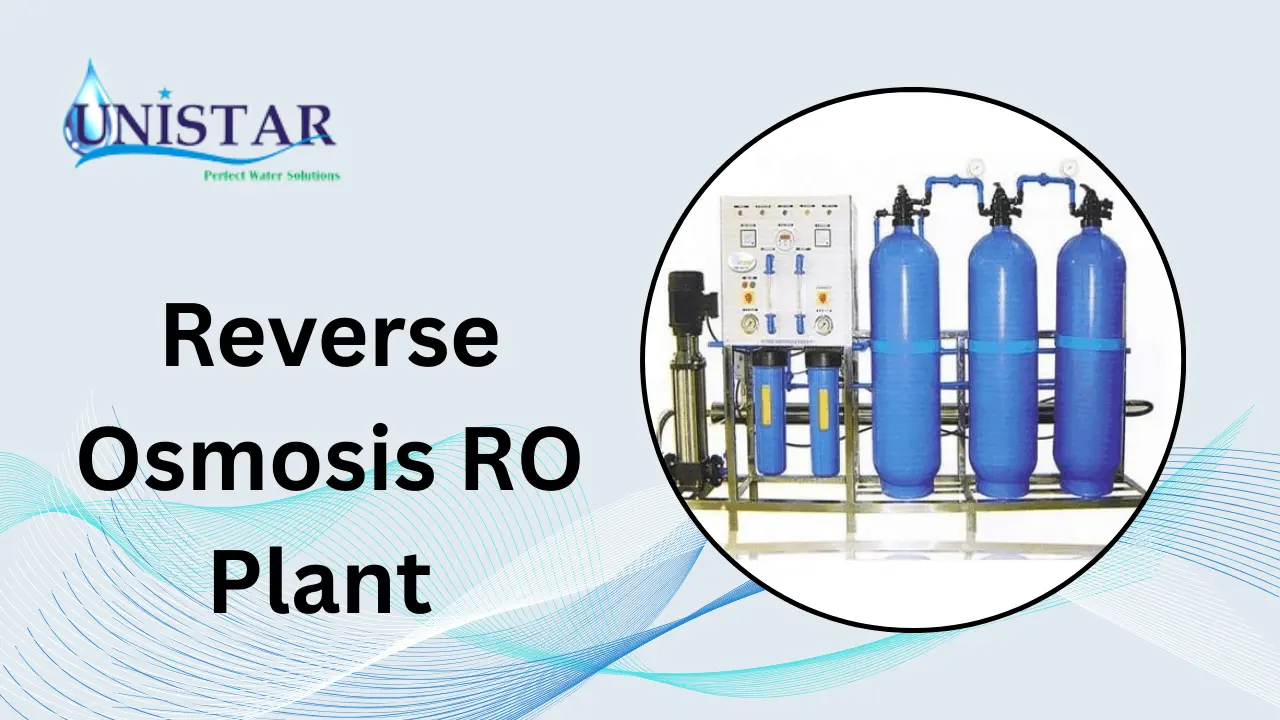
Today, the need for pure and safe water has increased more than ever. Whether in the industrial sector or domestic settings, the use of Reverse Osmosis Plants (RO Plants) is rapidly increasing. Reverse osmosis water treatment plants are a modern technology that provides high-quality potable water by removing dissolved impurities, salts, metals, and bacteria from water. But do you know which key components (RO components) work to keep an RO plant running smoothly? Let’s explore the RO plant parts names and their roles in detail—
What is a Reverse Osmosis RO Plant?
Reverse Osmosis is abbreviated as RO. Its full form is Reverse Osmosis Plant. It is a filtration technology that removes all dissolved salts, bacteria, dust, and chemicals from water, providing pure water.
15 Key Components Of A Reverse Osmosis Plant
1. Feed Water Pump
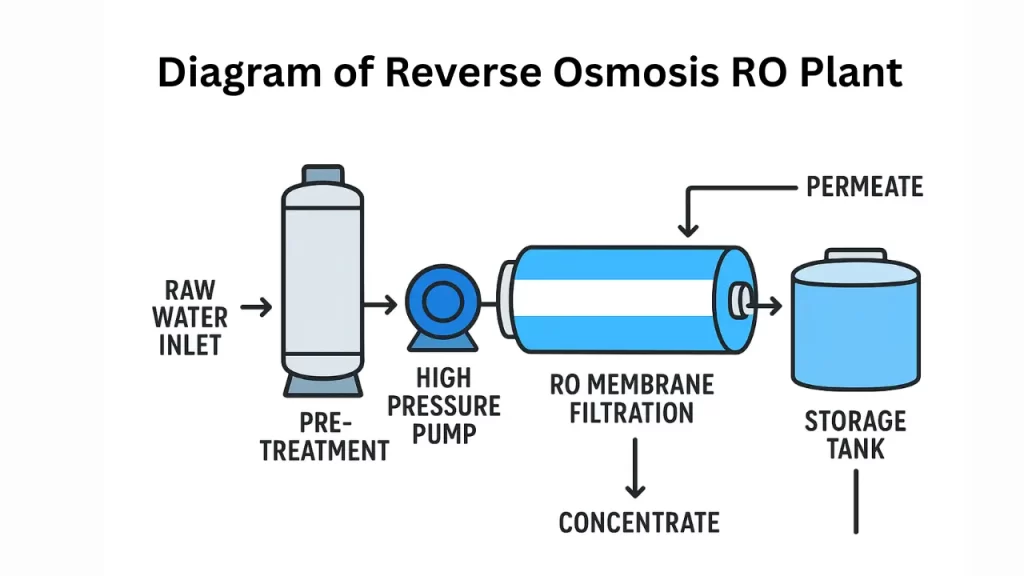
This is the beginning of the entire system. The feed water pump supplies raw water to the system with the necessary pressure to ensure effective filtration processes. This pump ensures that sufficient pressure is maintained to ensure the water flows through the membrane at the correct speed.
2. Sand Filter
The sand filter is the primary filter of the RO plant, removing sand, dirt, and other large particles from the water. This prevents subsequent equipment, such as the carbon filter and membrane, from clogging. This step is crucial for increasing the efficiency and lifespan of the entire reverse osmosis plant.
3. Activated Carbon Filter
his filter removes chlorine, odor, and chemical impurities. The activated carbon filter also improves the taste and color of the water. After passing through this stage, the water is fully prepared for the membrane.
4. Micron Cartridge Filter
This filter removes very fine impurities. Its function is to ensure that no small particles reach the RO membrane.
This protects the membrane and increases its lifespan.
5. High Pressure Pump
This can be called the heart of the reverse osmosis plant. This pump forces water through the membrane at high pressure so that only pure water molecules can pass through, leaving any remaining salts or metals behind. The quality of this pump directly affects the system’s performance.
6. RO Membrane
The most important part of the RO components is the RO membrane. This membrane removes 95–99% of impurities from the water. This component is the real purifier of purity in a reverse osmosis water treatment plant. The better its quality, the purer and safer the water will be.
7. Pressure Vessel
This sturdy container protects the RO membrane. The pressure vessel is capable of withstanding high pressure and prevents any leakage in the system. It is a vital component for the proper operation of the membrane.
8. Flow Meter
This device helps measure water flow. The flow meter can determine the amount of water flowing through the system. This helps the operator understand the system’s performance.
9. Pressure Gauge
This device monitors the pressure within the system. If the pressure drops too high or too low, it provides an immediate signal. This is a crucial component for RO plant maintenance and safety.
10. Control Panel
The control panel is the control center for the entire system. It automatically controls all components such as pumps, valves, and sensors. Modern RO plant designs also include automation and alarm systems on the control panel that immediately alert the operator to any problems.
11. Chemical Dosing System
This system delivers the precise amount of chemicals needed to maintain water quality. This prevents scaling, fouling, and bacteria buildup, keeping the RO membrane effective for a longer period of time.
12. Storage Tank
A storage tank is used to store purified water in a safe place. This tank is made of food-grade material to maintain water quality. In both industrial and domestic RO plants, its capacity is determined according to the need.
13. UV Sterilizer
This device works in the final purification stage. The UV sterilizer destroys microorganisms and viruses present in the water. This ensures that the water is completely safe and drinkable.
14. Electrical Panel
It provides power to all electrical components. It also maintains the safety and operational stability of the system. It is an essential component for the smooth operation of a reverse osmosis plant.
15. Skid or Frame
All RO components are mounted on a sturdy skid or frame to ensure the entire system is stable and easy to maintain. Unistar Aquatech Private Limited uses high-quality stainless steel frames in every RO plant, ensuring long-term durability.
Reverse Osmosis Plant Design and Its Importance
The performance of every reverse osmosis water treatment plant depends on its design. A proper RO plant design not only increases system efficiency but also reduces maintenance costs. Unistar Aquatech creates customized reverse osmosis plants tailored to each customer’s needs and water quality to ensure optimal results.
Key Benefits of a Reverse Osmosis Plant
- Removes up to 99% of dissolved impurities and salts.
- Long-lasting and low-maintenance solution.
- Suitable for industrial, commercial, and domestic use.
- Provides clean, tasty, and healthy water.
- Saves both energy and water.
Conclusion
Unistar Aquatech Private Limited is a leading RO plant and reverse osmosis water treatment plant manufacturer in India. We design systems with advanced technology and high-quality RO components that are reliable, durable, and energy-efficient. If you’re looking for a reliable, affordable, and modern reverse osmosis plant—Unistar Aquatech is the right choice for you.
Also Read: What is Water Cycle and its effect