A wastewater treatment plant is designed to clean polluted water by removing harmful contaminants step by step. Understanding the four stages of wastewater treatment helps us know how dirty water is converted into safe, treated water. In this blog, Unistar Aquatech Private Limited explains the complete process in simple words.
The waste water treatment plant works through a series of carefully designed treatment steps. Each stage plays an important role in improving water quality and protecting the environment.
Overview of the Wastewater Treatment Process
The wastewater treatment process is divided into four main stages. These stages gradually remove solid waste, organic matter, harmful microorganisms, and pollutants from the water. The four main stages of wastewater treatment are:
- Preliminary Treatment
- Primary Treatment
- Secondary Treatment
- Tertiary or Advanced Treatment
Each stage focuses on a specific type of impurity and prepares the water for the next step.
Stage One: Preliminary Treatment
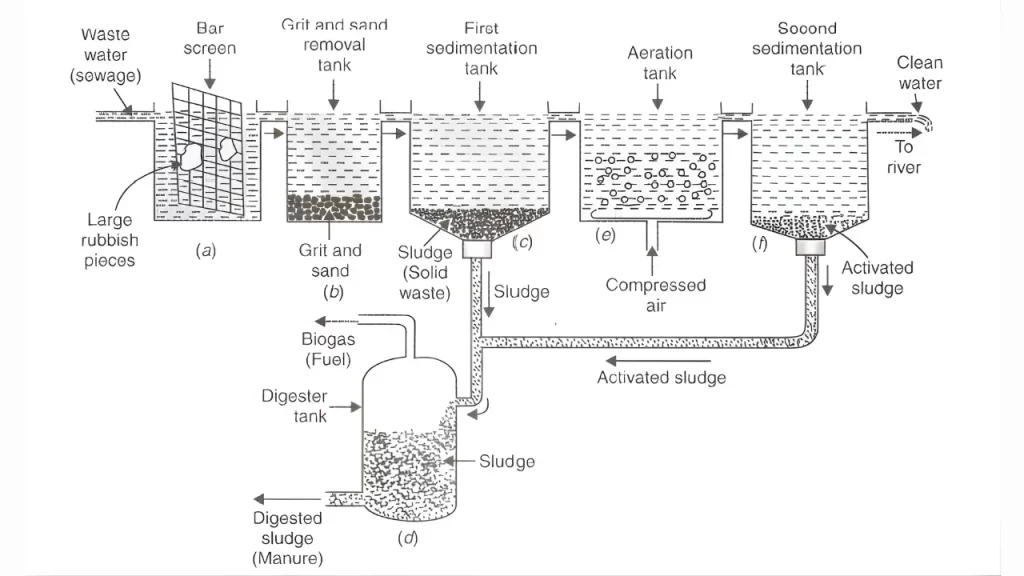
The first stage of a wastewater treatment plant is preliminary treatment. This stage mainly removes large and visible materials from the wastewater. When wastewater enters the plant, it often contains objects like plastic, rags, stones, sand, and other debris.
Screens are used to trap large solids, while grit chambers remove sand and small stones. This step is very important because it protects pumps, pipes, and other equipment from damage. Although preliminary treatment does not clean the water completely, it prepares the wastewater for further treatment.
This stage is the foundation of the entire wastewater treatment process, ensuring smooth operation of the plant.
Stage Two: Primary Treatment
Primary treatment is the second step in the wastewater treatment steps. In this stage, wastewater is allowed to slow down and stay in large settling tanks. Due to gravity, heavier solid particles settle at the bottom as sludge, while lighter materials float on the surface as scum.
The settled sludge is removed for further treatment, and the floating materials are skimmed off. At this stage, a significant amount of suspended solids and organic matter is removed from the wastewater.
Primary treatment improves water quality but does not remove dissolved pollutants or harmful microorganisms. The partially treated water then moves to the next stage of the wastewater treatment plant.
Stage Three: Secondary Treatment
Secondary treatment is one of the most important stages of wastewater treatment. This stage focuses on removing dissolved organic matter using biological processes. Microorganisms such as bacteria are used to break down organic pollutants present in the wastewater.
In this stage, the wastewater is mixed with air and microorganisms in aeration tanks. The bacteria consume organic waste and convert it into harmless substances. After this, the water flows into secondary settling tanks where the biological sludge settles at the bottom.
This stage significantly reduces pollution levels and improves water clarity. Secondary treatment is a key part of the wastewater treatment process because it removes most of the organic contaminants.
Stage Four: Tertiary or Advanced Treatment
The final stage of a waste water treatment plant is tertiary or advanced treatment. This stage is used when very high-quality treated water is required. Tertiary treatment removes remaining impurities such as nutrients, bacteria, viruses, and dissolved salts.
Processes like filtration, disinfection using chlorine or UV light, and nutrient removal are commonly used. After this stage, the treated water is safe to discharge into the environment or reuse for non-drinking purposes.
Tertiary treatment ensures that the final output meets environmental standards and supports sustainable water management.
Importance of Wastewater Treatment Steps
Each of the wastewater treatment steps plays a vital role in protecting human health and the environment. Without proper treatment, untreated wastewater can contaminate rivers, lakes, and groundwater, causing serious health risks.
The wastewater treatment plant helps prevent water pollution, controls the spread of diseases, and supports water reuse. It also helps industries and municipalities comply with environmental regulations.
Applications of Wastewater Treatment Plants
Wastewater treatment plants are widely used in residential areas, industrial facilities, hospitals, hotels, and commercial complexes. Industries use treatment plants to manage effluents before disposal or reuse.
Municipal waste water treatment plants handle sewage from cities and towns, ensuring safe disposal of wastewater. Advanced treatment systems are also used for water recycling and zero liquid discharge applications.
Role of Unistar Aquatech Private Limited
Unistar Aquatech Private Limited specializes in providing efficient and reliable solutions for wastewater management. We design and supply customized wastewater treatment plants based on client requirements and environmental norms.
Our systems are engineered to ensure smooth operation across all stages of wastewater treatment, delivering consistent performance and long service life. We focus on sustainable solutions that help conserve water and protect natural resources.
Benefits of a Proper Wastewater Treatment Process
A well-designed wastewater treatment process offers many benefits. It protects the environment, reduces water pollution, and supports water reuse. Treated wastewater can be reused for gardening, cooling systems, and industrial processes.
Wastewater treatment plants also help reduce operating costs in the long run and promote responsible water management practices.
Conclusion
Understanding the four stages of a wastewater treatment plant helps us appreciate how polluted water is safely treated before being released or reused. From preliminary screening to advanced purification, each stage of the wastewater treatment steps plays an important role in improving water quality.
With growing water scarcity and environmental concerns, efficient wastewater treatment has become essential. Unistar Aquatech Private Limited remains committed to delivering high-quality wastewater treatment plant solutions that support sustainability, safety, and environmental protection.
Also Read: What is PPM or Parts Per Million and How to Calculate PPM?