Industries use large quantities of water for manufacturing, cleaning, processing, cooling, and other operations. After use, this water becomes effluent and may contain chemicals, suspended solids, oils, organic matter, heavy metals, and other contaminants. Releasing untreated industrial wastewater into the environment can harm water bodies, soil, and ecosystems.
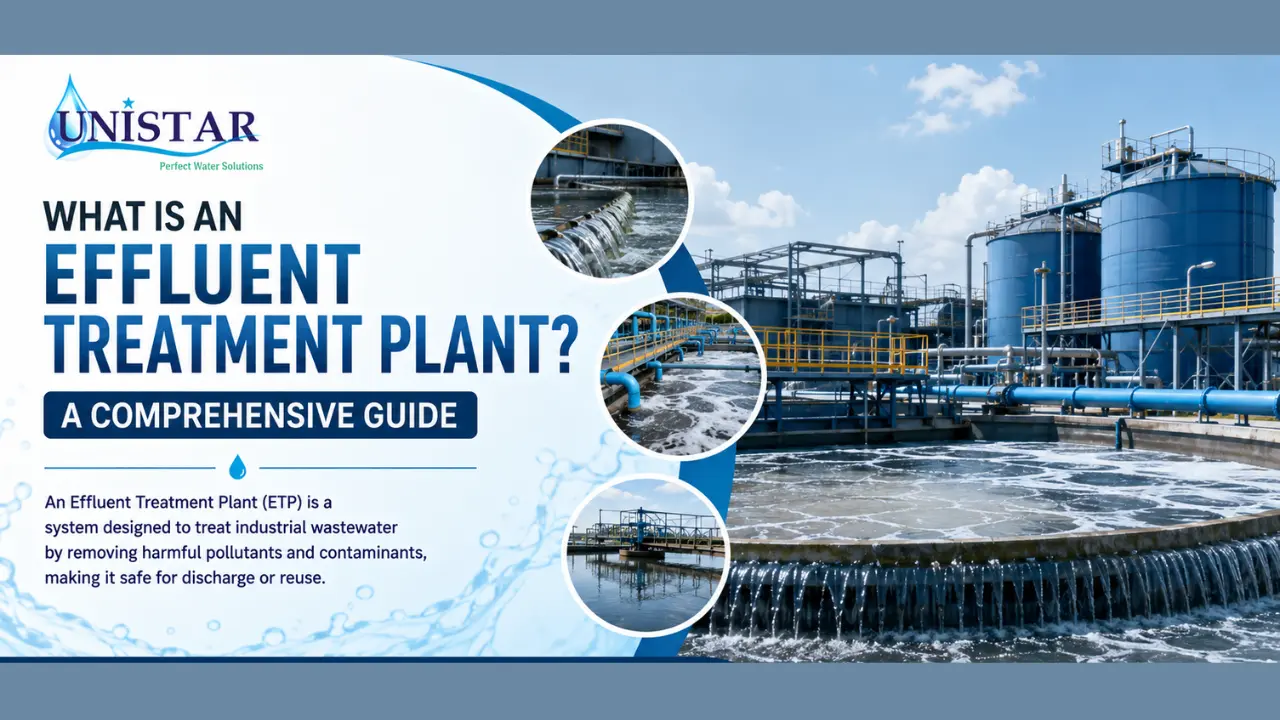
This is where an Effluent Treatment Plant (ETP) becomes important. An ETP is designed to treat industrial wastewater and reduce pollutants before the treated water is discharged or reused. In this comprehensive guide, we will understand what is effluent treatment plant, how it works, its major treatment stages, applications, and the importance of an efficient effluent treatment system.
What Is Effluent Treatment Plant?
An Effluent Treatment Plant is a wastewater treatment facility specifically designed to treat wastewater generated from industrial processes. The primary purpose of an ETP is to remove or reduce physical, chemical, and biological contaminants from industrial effluent.
Unlike domestic sewage treatment, industrial wastewater can vary significantly depending on the manufacturing process. For example, wastewater from textile, pharmaceutical, chemical, food-processing, metal-finishing, and dairy industries can have very different characteristics. Therefore, effluent treatment plants are generally designed according to the type, volume, and contamination level of the wastewater being generated.
A properly designed ETP helps industries manage wastewater responsibly while supporting environmental protection, regulatory compliance, and water conservation.
Also Read: Advantages and Disadvantages of Reverse Osmosis Systems
Why Is an Effluent Treatment Plant Important?
Industrial wastewater may contain substances that cannot be safely discharged without proper treatment. An ETP helps control these pollutants before the wastewater is released or reused.
Some major reasons industries install an ETP include:
- Reducing harmful pollutants in industrial wastewater
- Protecting rivers, lakes, groundwater, and soil
- Supporting compliance with applicable environmental requirements
- Enabling treated water to be reused for suitable applications
- Reducing the environmental impact of industrial operations
- Improving overall water and wastewater management
An ETP is therefore not simply a wastewater disposal solution. It is an important part of a modern industry’s environmental management strategy.
How Does an Effluent Treatment Plant Work?
The working of an ETP depends on the characteristics of the wastewater and the required quality of treated water. Generally, treatment takes place through multiple stages.
1. Preliminary Treatment
The first stage removes large and easily separable materials from the incoming effluent. Screens, collection tanks, and other equipment may be used to remove plastics, fibers, large particles, and floating debris.
This initial step protects downstream equipment and prepares the wastewater for further treatment.
2. Equalization
Industrial wastewater generation may fluctuate throughout the day. An equalization tank helps collect and mix the incoming effluent so that variations in flow, concentration, and pollutant load can be controlled.
Equalization provides a more consistent feed to the subsequent treatment stages, improving overall process stability.
3. Primary Treatment
Primary treatment focuses mainly on removing suspended solids, floating matter, and other physically separable contaminants.
Depending on the wastewater characteristics, processes such as sedimentation, coagulation, and flocculation may be incorporated. Chemicals can be added where required to help suspended particles combine into larger flocs that can settle more effectively.
4. Biological Treatment
The biological stage is used when the wastewater contains biodegradable organic matter. Microorganisms break down organic pollutants under controlled operating conditions. Aeration tanks, activated sludge processes, or other biological treatment technologies may be used depending on the application.
This stage can significantly reduce parameters such as Biochemical Oxygen Demand (BOD) and Chemical Oxygen Demand (COD) when appropriately designed and operated.
5. Secondary Clarification
After biological treatment, the wastewater may contain biological solids. A clarifier separates these solids from the treated water through settling. A portion of the settled sludge may be returned to the biological process, while excess sludge is removed for further handling and treatment.
6. Tertiary or Advanced Treatment
When a higher level of treated-water quality is required, additional treatment may be introduced. Depending on the application, this can include filtration, activated carbon treatment, disinfection, membrane processes, or other advanced technologies.
The choice of tertiary treatment depends on whether the treated water will be discharged or reused for a particular purpose.
Effluent Treatment Plant Diagram: Understanding the Process Flow
An effluent treatment plant diagram is useful for understanding how wastewater moves through different treatment stages.
A typical process flow can be represented as:
Industrial Effluent → Screening → Collection/Equalization Tank → Primary Treatment → Biological Treatment → Clarifier → Filtration/Advanced Treatment → Disinfection → Treated Water
The actual process flow can differ from one industry to another. Some industries may require chemical treatment for specific contaminants, while others may need advanced membrane systems or specialized processes.
The sludge generated during treatment is generally directed toward a separate sludge-handling process, which may include thickening, dewatering, drying, and appropriate disposal or further management.
Major Components of an Effluent Treatment System
An effluent treatment system consists of several interconnected units that work together to achieve the desired wastewater quality. Common components include:
- Screening Unit – Removes larger solid materials from incoming wastewater.
- Collection or Equalization Tank – Balances flow and pollutant concentration.
- Chemical Treatment Units – Used for pH adjustment, coagulation, or precipitation where required.
- Primary Clarifier – Separates settleable solids from wastewater.
- Aeration Tank – Provides controlled conditions for biological treatment.
- Secondary Clarifier – Separates biological solids from treated water.
- Pressure Sand Filter – Helps remove remaining suspended particles.
- Activated Carbon Filter – Can help reduce certain dissolved organic compounds, color, and odor.
- Disinfection Unit – Used to reduce microorganisms when required.
- Sludge Handling System – Manages sludge produced during treatment.
Not every ETP requires all of these components. The final configuration should be selected according to wastewater analysis, treatment objectives, flow rate, and reuse or discharge requirements.
Types of Effluent Treatment Plants
Different industries generate different types of wastewater, so ETP designs are not one-size-fits-all.
Chemical ETP
Chemical treatment uses processes such as neutralization, coagulation, flocculation, and precipitation to remove specific contaminants. It is particularly useful where wastewater contains chemicals, metals, or suspended pollutants that require physicochemical treatment.
Biological ETP
Biological treatment uses microorganisms to break down biodegradable organic matter. It is commonly incorporated where wastewater has a significant organic load.
Combined Chemical and Biological ETP
Many industrial applications require both chemical and biological processes. Combining these methods allows the treatment system to address a wider range of contaminants.
Advanced Effluent Treatment Systems
Industries requiring high-quality treated water may use advanced technologies such as ultrafiltration, nanofiltration, reverse osmosis, evaporation, or other specialized treatment processes.
Benefits of Effluent Treatment Plants
A well-designed ETP can provide several operational and environmental benefits:
- Pollution Control – Reduces contaminants before industrial wastewater is discharged.
- Water Conservation – Treated wastewater can potentially be reused for suitable non-potable applications.
- Better Environmental Management – Helps reduce the impact of industrial activities on natural water resources.
- Improved Process Control – A properly engineered system provides controlled and repeatable wastewater treatment.
- Sludge Management – Dedicated treatment stages help separate and manage solids generated during wastewater treatment.
- Regulatory Support – Proper treatment helps industries meet applicable wastewater discharge requirements.
- Long-Term Sustainability – Efficient water and wastewater management can contribute to more sustainable industrial operations.
Industries That Use Effluent Treatment Plants
Effluent treatment plants are used across a wide range of industries, including:
- Textile and dyeing industries
- Pharmaceutical manufacturing
- Chemical industries
- Food and beverage processing
- Dairy plants
- Paper and pulp industries
- Electroplating and metal-finishing units
- Distilleries
- Tanneries
- Automobile and engineering industries
- Oil and chemical processing industries
The treatment process is customized because wastewater composition can vary considerably between industries and even between individual manufacturing facilities.
ETP vs STP: What Is the Difference?
ETP and STP are both wastewater treatment systems, but they are designed for different wastewater sources.
An ETP primarily treats industrial effluent, which may contain chemicals, oils, heavy metals, high organic loads, and process-specific contaminants.
An STP (Sewage Treatment Plant) is mainly designed to treat domestic sewage generated from toilets, kitchens, bathrooms, and similar sources.
The treatment technology and equipment selection for each system depend on the characteristics of the wastewater being treated.
How to Choose the Right Effluent Treatment Plant
Selecting an ETP should begin with a detailed analysis of the wastewater rather than simply choosing a standard plant size.
Important factors include:
- Daily wastewater flow rate
- pH and temperature
- BOD and COD levels
- Total suspended solids
- Oil and grease concentration
- Presence of heavy metals or specific chemicals
- Required treated-water quality
- Possibility of water reuse
- Available installation area
- Sludge generation and disposal requirements
A wastewater analysis helps determine which treatment stages are necessary and prevents unnecessary equipment or inadequate treatment capacity.
Conclusion
Understanding what is effluent treatment plant is important for any industry that generates process wastewater. An ETP provides a structured approach to collecting, treating, and managing industrial effluent while helping reduce its environmental impact.
From preliminary screening and equalization to chemical, biological, filtration, and advanced treatment, each stage of an effluent treatment system has a specific role. The right combination of technologies depends on wastewater characteristics and the desired quality of treated water.
For industries looking for reliable wastewater management, Unistar Aquatech Private Limited can provide application-oriented solutions based on specific industrial effluent treatment requirements.