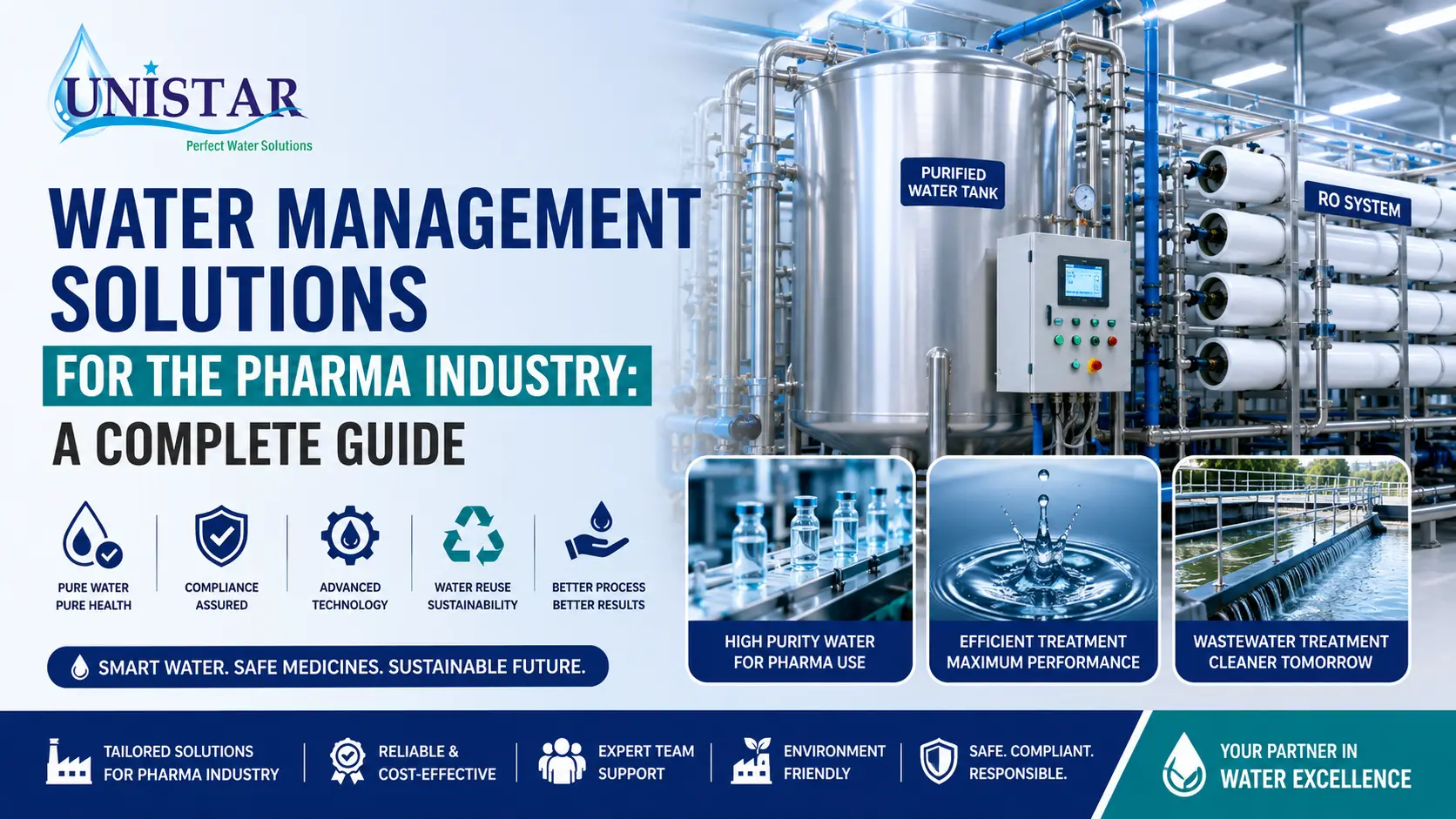
Water is among the most important resources in pharmaceutical production. Water is used in the entire process of making medicines and vaccines; it is used in cleaning and ensuring that there is no contamination of any kind. The reason why pharmaceutical firms have such high standards for water processing is because the quality of water affects the quality of the products made.
An efficient water system in pharmaceutical industry not only ensures regulatory compliance but also improves operational efficiency, reduces water wastage, and supports sustainable manufacturing practices. As environmental regulations become stricter and industries focus more on resource conservation, investing in advanced water management solutions has become essential.
In this guide, we will explore the importance of water management solutions for the pharma industry, the different types of water systems used in pharmaceutical manufacturing, treatment processes, wastewater management, and best practices for maintaining an efficient water system in pharma.Why Water Management is Important in the Pharmaceutical Industry
Water is used throughout pharmaceutical manufacturing for formulation, equipment cleaning, steam generation, laboratory testing, cooling systems, and sanitation. Poor-quality water can introduce contaminants, affect product consistency, and lead to regulatory non-compliance.
An effective water management system helps pharmaceutical companies:
- Maintain product quality and safety
- Meet GMP, WHO, and regulatory standards
- Reduce production downtime
- Minimize water consumption
- Lower operating costs
- Improve environmental sustainability
- Enable water recycling and reuse
A properly designed water treatment system ensures that every stage of production receives water of the required quality.
Also Read: Importance of Water Conservation: Why Saving Water Matters More Than Ever
Understanding the Water System in Pharmaceutical Industry
A water system in pharmaceutical industry consists of multiple treatment, storage, and distribution processes designed to deliver water that meets specific quality standards.
The system generally includes:
- Raw water collection
- Pre-treatment
- Reverse Osmosis (RO)
- Activated carbon filtration
- Softening
- UV disinfection
- Deionization (DI)
- Ultrafiltration
- Storage tanks
- Distribution loop
- Monitoring and control systems
Each stage removes specific impurities to ensure the final water quality matches pharmaceutical manufacturing requirements.
Types of Water Used in the Pharma Industry
Different pharmaceutical processes require different grades of water.
Purified Water (PW)
Purified Water is commonly used for equipment washing, formulation, cleaning, and laboratory applications. It is produced using advanced purification technologies such as Reverse Osmosis, Deionization, and UV treatment.
Water for Injection (WFI)
Water for Injection is the highest purity water used in injectable medicines, vaccines, and sterile pharmaceutical products. It is manufactured through highly controlled purification processes to eliminate microorganisms and endotoxins.
Clean Steam
Clean steam is used for sterilization of production equipment, pipelines, and manufacturing vessels.
Process Water
Process water supports various production activities that do not require pharmaceutical-grade purified water but still demand controlled water quality.
Choosing the appropriate water grade is essential for ensuring product quality and regulatory compliance.
Key Components of a Water System in Pharma
An efficient water system in pharma consists of several integrated treatment units working together.
Raw Water Treatment
The first stage removes suspended solids, sand, and large impurities before advanced purification begins.
Water Softener
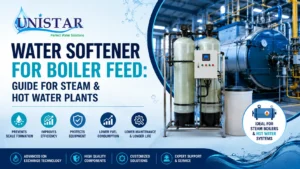
Hardness-causing minerals such as calcium and magnesium are removed to protect downstream equipment.
Activated Carbon Filter
Activated carbon eliminates chlorine, odor, color, and organic contaminants that may affect pharmaceutical processes.
Reverse Osmosis (RO)
RO membranes remove dissolved salts, bacteria, viruses, heavy metals, and other contaminants, producing high-quality purified water.
UV Sterilization
Ultraviolet treatment destroys microorganisms without using chemicals, ensuring microbiological safety.
Storage and Distribution
Purified water is stored in hygienic stainless-steel tanks and circulated through a closed-loop piping system to maintain consistent quality.
Wastewater Management in the Pharmaceutical Industry
Pharmaceutical manufacturing generates wastewater containing chemicals, solvents, active pharmaceutical ingredients (APIs), cleaning agents, and organic pollutants. Releasing untreated wastewater into the environment can cause serious ecological damage and violate pollution control regulations.
Modern water management systems include dedicated wastewater treatment solutions that safely treat and recycle wastewater before discharge or reuse.
Common treatment technologies include:
- Equalization tanks
- pH correction
- Biological treatment
- Membrane filtration
- Reverse Osmosis
- Activated carbon treatment
- Sludge management
- Disinfection
Proper wastewater treatment protects the environment while reducing freshwater consumption.
Benefits of Advanced Water Management Solutions
Investing in modern water treatment systems provides several operational and environmental benefits.
Improved Product Quality
High-purity water prevents contamination and ensures consistent pharmaceutical production.
Regulatory Compliance
Modern treatment systems help manufacturers comply with GMP, WHO, FDA, and pollution control standards.
Reduced Water Consumption
Efficient treatment and recycling significantly lower freshwater usage.
Lower Operating Costs
Water recovery and reuse reduce utility expenses and wastewater disposal costs.
Environmental Sustainability
Water recycling minimizes environmental impact and supports sustainable manufacturing.
Increased Equipment Life
Proper water treatment reduces scaling, corrosion, and fouling in production equipment.
Better Process Reliability
Automated monitoring systems ensure consistent water quality and uninterrupted plant operations.
Challenges in Pharmaceutical Water Management
Despite technological advancements, pharmaceutical manufacturers face several water management challenges.
Some common issues include:
- High water consumption
- Stringent quality standards
- Microbial contamination
- Scaling in pipelines
- Membrane fouling
- Wastewater disposal
- Rising environmental regulations
- High operating costs
Advanced treatment technologies and regular system maintenance help overcome these challenges effectively.
Water Recycling and Reuse
Sustainability has become a major focus for pharmaceutical companies worldwide.
Treated wastewater can often be reused for:
- Cooling tower makeup water
- Boiler feed after treatment
- Gardening
- Toilet flushing
- Utility operations
- Landscape irrigation
Water recycling reduces dependence on freshwater resources while lowering operational costs and supporting environmental conservation.
Best Practices for Maintaining a Pharmaceutical Water System
To ensure consistent performance, pharmaceutical water systems require regular inspection and preventive maintenance.
Recommended practices include:
- Regular water quality testing
- Routine membrane cleaning
- Sanitization of storage tanks
- Pipeline disinfection
- Calibration of monitoring instruments
- Scheduled filter replacement
- Continuous microbial monitoring
- Preventive maintenance of pumps and valves
Following these practices ensures long-term reliability and regulatory compliance.
Why Choose Unistar Aquatech Private Limited?
Unistar Aquatech Private Limited is a trusted provider of advanced water and wastewater treatment solutions for pharmaceutical, industrial, commercial, and municipal applications. We design customized water management systems that meet the demanding quality requirements of pharmaceutical manufacturing.
Our solutions include Reverse Osmosis (RO) Plants, Effluent Treatment Plants (ETP), Sewage Treatment Plants (STP), Demineralization Plants, Water Softening Systems, and Water Recycling Solutions. Every system is engineered for high efficiency, reliable performance, regulatory compliance, and long service life.
With a team of experienced professionals and modern engineering capabilities, Unistar Aquatech helps pharmaceutical companies optimize water usage, improve production efficiency, and achieve sustainable water management.
Conclusion
Water is the backbone of pharmaceutical manufacturing, making an efficient water system in pharmaceutical industry essential for producing safe, high-quality medicines. From raw water treatment and purified water generation to wastewater treatment and recycling, every stage plays a vital role in ensuring regulatory compliance, operational efficiency, and environmental sustainability.
Implementing advanced water management solutions for the pharma industry not only improves product quality but also reduces operating costs, conserves valuable water resources, and supports sustainable manufacturing practices. If your organization is looking for reliable and customized water system in pharma solutions, Unistar Aquatech Private Limited offers advanced technologies designed to meet the evolving needs of the pharmaceutical industry.