Water is an essential resource for almost every industrial operation, from manufacturing and food processing to chemical production and power generation. However, increasing water demand, rising operating costs, and growing environmental concerns are encouraging industries to manage water more efficiently. One effective approach is to treat wastewater and reuse it for suitable industrial applications instead of relying entirely on fresh water.
Industrial wastewater reuse involves treating wastewater generated during industrial processes so that it can be safely reused for specific purposes. With appropriate treatment technologies, businesses can reduce freshwater consumption, manage wastewater discharge, and improve the overall efficiency of their water management systems.
In this blog, we will explore the major methods, benefits, and practical applications of wastewater treatment and reuse across different industries.
What Is Industrial Wastewater Reuse?
Industrial wastewater reuse is the process of collecting, treating, and using wastewater generated by manufacturing or other industrial activities. Depending on its source, wastewater may contain suspended solids, oils, chemicals, organic matter, dissolved salts, and other contaminants.
Before reuse, wastewater must undergo suitable treatment to meet the quality requirements of its intended application. Water used for equipment cooling, for example, may require a different treatment process from water intended for boiler feed or product-contact applications.
A properly designed wastewater treatment and reuse system considers wastewater characteristics, required water quality, treatment costs, and the specific needs of the facility.
Also Read: Sludge Dewatering in Wastewater Treatment: Methods, Equipment and Benefits
Why Is Wastewater Treatment and Reuse Important?
Many industrial facilities consume large quantities of water for cooling, cleaning, washing, processing, and utility operations. A significant portion of this water may leave the process as wastewater.
Discharging wastewater after appropriate treatment remains important where reuse is not practical. However, when the treated water meets the required quality standards, reusing it can reduce the demand for fresh water and make industrial water management more sustainable.
Industrial wastewater reuse can also help businesses prepare for water shortages, improve resource efficiency, and support environmental compliance. The most effective approach is to identify where water is consumed, determine which wastewater streams can be recovered, and match treated water quality to suitable reuse applications.
Common Methods of Industrial Wastewater Reuse
Different treatment technologies are used depending on the type and concentration of contaminants present in industrial wastewater.
1. Primary Treatment and Filtration
Primary treatment removes larger particles, suspended solids, and other physical impurities from wastewater. Screening, sedimentation, and suitable filtration systems may be used during this stage.
Pressure sand filters and other filtration technologies can help remove remaining suspended particles after the initial treatment process.
Although primary treatment and filtration are useful for improving water quality, they may not remove dissolved salts, microorganisms, or all chemical contaminants. Additional treatment is often necessary before industrial reuse.
2. Biological Wastewater Treatment
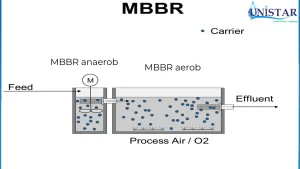
Biological treatment uses microorganisms to break down biodegradable organic matter present in wastewater. Technologies such as the Moving Bed Biofilm Reactor (MBBR), Sequencing Batch Reactor (SBR), and activated sludge processes may be selected according to the wastewater characteristics and operational requirements.
This treatment stage is particularly relevant to wastewater containing biodegradable organic pollutants, including wastewater generated by food processing and certain manufacturing operations.
Biological treatment can improve water quality significantly, but further filtration or disinfection may be required before reuse.
3. Ultrafiltration and Membrane Filtration
Membrane filtration separates contaminants from water using specialised membranes. Ultrafiltration can remove many suspended particles, colloids, and microorganisms, depending on the membrane and operating conditions.
It is often used as a pretreatment stage before reverse osmosis or as part of a broader water recovery system.
The selection of membrane technology depends on the target water quality, wastewater composition, fouling potential, and operating costs.
4. Reverse Osmosis (RO)
Reverse osmosis is a membrane-based treatment process that removes a large proportion of dissolved salts and many other dissolved substances from water.
Industrial RO systems are commonly used when recovered water requires lower dissolved solids for applications such as certain cooling systems, process water requirements, or boiler feed pretreatment.
RO systems produce a concentrated reject stream that must be managed appropriately. Therefore, businesses should evaluate water recovery rates, energy consumption, pretreatment requirements, and concentrate disposal options before installation.
5. Advanced Oxidation and Disinfection
Some industrial wastewater streams contain persistent organic compounds or microorganisms that require additional treatment.
Advanced oxidation processes use reactive chemical species to break down certain difficult-to-treat contaminants. Disinfection methods, including ultraviolet treatment and suitable chemical processes, can reduce microbial risks when properly designed and operated.
These methods are selected according to the contaminants involved and the intended reuse application. They are not universal replacements for primary, biological, or membrane treatment.
Practical Applications of Industrial Wastewater Reuse
Treated wastewater can serve several purposes across industrial facilities, provided that its quality meets the requirements of the intended use.
Cooling Towers and Industrial Cooling
Cooling systems often require significant quantities of water to replace evaporation, drift, and blowdown losses. Properly treated wastewater may be reused as cooling tower makeup water.
Treatment may include filtration, biological control, hardness management, and other processes depending on water quality. Monitoring scaling, corrosion, and microbial growth is essential for reliable operation.
Boiler Feedwater Pretreatment
Boilers require water with carefully controlled quality to prevent scaling, corrosion, and equipment damage.
Recovered wastewater may be considered as a source for boiler feedwater after suitable treatment. Depending on boiler pressure and water specifications, additional processes such as reverse osmosis, demineralisation, and deaeration may be necessary.
Untreated or inadequately treated wastewater should never be introduced directly into a boiler system.
Equipment and Floor Washing
Some industrial facilities can reuse treated water for equipment washing, floor cleaning, and other non-product-contact cleaning activities.
The required treatment depends on the cleaning process, the type of contaminants present, and whether the water could affect product quality or workplace safety.
Using recovered water for appropriate cleaning applications can reduce freshwater demand without compromising essential hygiene requirements.
Manufacturing and Process Water
Certain manufacturing operations can reuse recovered water in non-critical process applications. Examples may include initial washing stages, utility operations, and selected production processes where water quality requirements permit.
Each application requires a careful assessment because residual chemicals, dissolved salts, or other contaminants may affect product quality, equipment performance, or process efficiency.
Gardening and Greenbelt Irrigation
Treated industrial wastewater may be suitable for irrigating designated greenbelts or landscaping areas when it meets applicable requirements.
Before reuse, facilities should evaluate salinity, sodium levels, specific contaminants, and potential soil or groundwater impacts. Suitable monitoring and application practices help reduce environmental risks.
Key Benefits of Industrial Wastewater Reuse
Reduced Freshwater Consumption
Reusing treated wastewater reduces the amount of freshwater required for suitable industrial operations. This can be particularly valuable for facilities operating in water-stressed regions.
Lower Water Procurement Costs
Recovering water from existing wastewater streams may reduce expenses associated with freshwater supply, depending on treatment costs, local water prices, and the volume successfully reused.
Improved Wastewater Management
An integrated reuse system can reduce the volume of wastewater discharged from a facility when treated water is recovered for suitable applications. However, residual streams and treatment rejects still require appropriate management.
Better Resource Efficiency
Wastewater reuse encourages businesses to assess water consumption, identify losses, and optimise their overall water management strategy.
Support for Environmental Goals
Responsible water reuse can support corporate sustainability objectives and reduce pressure on local freshwater resources. Facilities must still comply with applicable discharge, reuse, and environmental regulations.
How to Implement an Effective Wastewater Reuse System
A successful industrial wastewater reuse project begins with a detailed assessment of the facility.
First, identify wastewater sources and measure their flow rates and contaminant levels. Next, determine which applications can use recovered water and establish the required quality parameters.
The treatment system should then be selected according to these requirements. A combination of biological treatment, filtration, membrane separation, and disinfection may be appropriate, depending on the wastewater composition.
Finally, establish regular monitoring, preventive maintenance, and a clear plan for managing sludge, membrane concentrates, and other residuals. Tracking water recovery, treatment costs, and operational performance helps determine whether the system is delivering the expected results.
Why Choose Unistar Aquatech Private Limited?
Unistar Aquatech Private Limited provides water and wastewater treatment solutions for industrial and commercial requirements. Businesses exploring wastewater recovery can evaluate a suitable treatment configuration based on wastewater characteristics, daily flow, reuse objectives, and applicable water quality standards.
A well-planned system should balance treatment performance, operating costs, maintenance requirements, and the quality needed for each reuse application.
Conclusion
Industrial wastewater reuse is a practical way to improve water efficiency, reduce freshwater demand, and strengthen industrial wastewater management. From cooling towers and cleaning operations to selected manufacturing applications, treated wastewater can become a valuable resource when its quality matches the intended use.
By adopting appropriate treatment technologies and maintaining consistent monitoring, industries can make wastewater treatment and reuse an effective part of their long-term water management strategy. Unistar Aquatech Private Limited can be considered when evaluating treatment solutions designed around specific industrial water recovery requirements.